
Concrete Driveway Cost Calculator
Measure your driveway to estimate quantity and priced work.
Measure your driveway
Editable prices are planning allowances, not quotes. Unpriced work stays unknown.
Enter your measurements to start the worksheet.
Your worksheet
Start with the dimensions and planned thickness, or enter billed yards. Your worksheet updates as you enter a complete set of measurements.
Complete the required inputs to update the worksheet.
Planning estimate, not a quote. Calculation methods and price limits.
Low/high span Concrete Network plain $5-$8 and HomeGuide standard $6-$10. Typical $7.25 is the mean of their range midpoints, not a measured national average. Angi broad $8-$20 includes other finishes and is a separate option. Removal, permits, tax and unusual site work remain unknown.
Measurement diagram and manual formula
Convert all dimensions to one unit before multiplying. Circle area = π × (diameter ÷ 2)². Add only nonoverlapping sections. Cubic yards = cubic feet ÷ 27. Whole bags = round up adjusted cubic feet ÷ published yield. Display rounding does not set a supplier order increment.
Measurement, prices and assumptions12
- Estimate your concrete driveway
- Inputs and measurement help
- Your estimate and line items
- How the driveway cost calculator works
- National concrete driveway cost ranges
- Finish, thickness and site costs
- New driveway versus replacement
- What the estimate excludes
- Browse concrete projects
- Keep the estimate tied to its scope
- FAQ: this project
- Verdict on your driveway cost calculator result
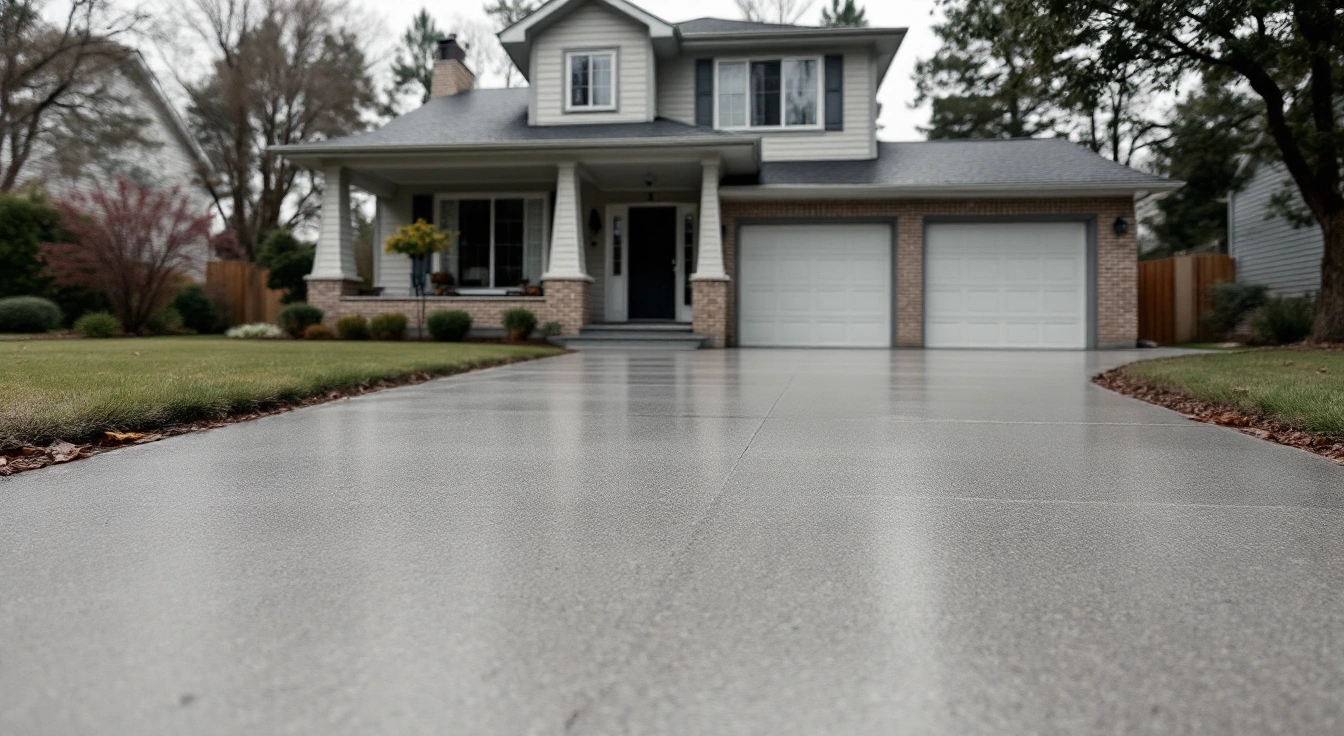
This concrete driveway cost calculator separates the concrete you need from the work your quote covers. Enter dimensions and the stated thickness. The tool starts with editable national price ranges. You can price a new drive, an extension or a replacement. Leave an unknown rate blank to get volume and a clear list of unpriced work.
A driveway budget starts with measured area and a defined scope. The tool calculates volume from area and thickness, then applies either an installed square-foot rate or separate material and work rates. It adds only the extras you enter. National source ranges start the budget. They do not price your property or choose its design.
Estimate your concrete driveway
Start with a sketch of the area that will receive new concrete. Include an apron, parking pad or turning area only if it belongs in this job. Split irregular areas into sections that do not overlap. Keep the area to remove separate from the area to install. A new drive can have another outline from the old drive.
Use feet and inches, or switch the dimension fields to metric units. Enter the planned slab thickness from your written project plan. A thickness entered here is a measurement assumption. The calculator does not decide what will carry a vehicle or meet a local rule.
Choose the rate method that matches the quote. If you have a full installed rate per square foot, do not also add concrete and finishing labor. If you have separate rates, itemize them. This makes it easier to spot a missing charge and avoids paying for the same work twice in your estimate.
Inputs and measurement help
Measure the concrete footprint, not the whole lot. For a rectangle, multiply length by width. A circular pad needs its full diameter. For a curved drive, use a measured area or split the plan into small separate sections. A curved edge does not turn the whole drive into a circle.
Measure each section at the same stage of the job. A survey area, the old slab area and a new layout may all differ. Keep the source of your dimensions on the printout. If you only have a rough sketch, the result remains a scenario until you measure it.
The allowance field starts at zero. It adds the percentage you choose to the net concrete volume. It does not recommend an order amount. Ask the supplier how it bills quantity and what order increments apply. Display rounding alone is not an instruction to order that rounded amount.
Your estimate and line items
The result shows area, thickness, net volume and allowance-adjusted amount. It applies the prefilled low and high rates to the priced scope. The typical scenario uses its separately stated rate. It divides that cost by new area to show the effective cost per square foot. That figure includes only the listed work.
| Budget line | Amount or basis | What to check |
|---|---|---|
| Concrete material | Allowance-adjusted cubic yards | Mix, supply basis and delivery |
| Installed package | New square feet | Included base, labor plus finish and material |
| Removal | Old square feet or cubic yards | Old thickness plus steel or fibers and hauling |
| Base and finish | New square feet, when separate | Avoid overlap with an installed package |
| Delivery and other fees | Per job or entered waiting time | Included, extra or still unknown |
| Tax | Chosen taxable subtotal | Rate and which lines are taxable |
An empty fee is unknown or excluded, not proof that the supplier waives it. Read the exclusions under the result before comparing it with a quote. A low total with removal missing is not the same scope as a full replacement price.
How the driveway cost calculator works
Area in square feet multiplied by thickness in inches, divided by 12, gives cubic feet. Divide that volume by 27 to get cubic yards. Multiply the net amount by one plus your allowance expressed as a fraction. Keep full precision until the final display.
For a worked example, a 20-foot by 30-foot drive has an area of 600 square feet. At an assumed 4-inch thickness, its net volume is 200 cubic feet, or about 7.41 cubic yards. The thickness is for arithmetic only. It is not a design recommendation.
National concrete driveway cost ranges
Use these published US ranges for planning, then compare a quote for your site. The plain default spans Concrete Network and HomeGuide; Angi's broader finish group stays separate because it covers different work.
| National source | Published scope | Cost per square foot | Math for 600 square feet |
|---|---|---|---|
| Concrete Network, January 13, 2026 | Plain gray driveway | $5 to $8 | $3,000 to $4,800 |
| HomeGuide, June 3, 2025 | Standard gray, installed | $6 to $10 | $3,600 to $6,000 |
| Angi, April 16, 2026 | Broader driveway range | $8 to $20 | $4,800 to $12,000 |
The totals multiply each range by the same example area. They are not surveyed project totals. The plain default uses $5 low, $7.25 typical and $10 high per square foot.
Its typical rate is the mean of the two plain-range midpoints, not an observed national average. Angi covers a broader scope than plain concrete. Confirm thickness and finish, then price any excluded removal, drainage, access, permit or tax. Use your written quote for a project estimate.
Finish, thickness and site costs
Choose a plain or broom finish, stamped work, or exposed aggregate. The choice records what your rate must cover. It does not add a secret finish multiplier. If you switch finish while keeping an old rate, check that rate against the new scope.
Thickness affects volume directly. Increasing the entered thickness increases the amount of concrete even when the footprint stays the same. The price of that extra material does not describe the whole cost of a thicker slab. Quote scope can also include excavation, other details and extra work.
Save base work plus steel or fibers and access as known or unknown. If the site has limited truck access, ask how concrete will reach the forms. Do not assume the concrete truck can cross a sidewalk, pass under wires or stand on the existing surface. Add a quoted access fee separately if the installed rate excludes it.
NRMCA explains that ready-mix requirements depend on the loads; exposure; and service conditions. Enter the written project plan rather than picking a strength or steel or fibers layout from a price list. A budget tool cannot approve either.
New driveway versus replacement
For new work, define excavation, base preparation and how the drive meets the street and garage. An empty site does not mean there is no preparation cost. For an extension, define its new footprint and the joint at existing concrete. Keep work on the old section out of the new-area count unless the quote includes it.
For replacement, enter the old surface area and thickness. Price removal on its own line. Add hauling and waste fees only when they are outside the installed package. The old slab may be thicker at edges or have steel within it. If that is unknown, keep the removal price conditional on those facts.
The concrete removal cost tool lets you build a separate slab removal budget. Its output does not buy new concrete or include installed work. Transfer only the lines your driveway quote excludes.
What the estimate excludes
The tool does not assess soil plus drainage or loading. It does not choose slab thickness plus steel or fibers, joints or a mix. Structural slabs, raised drives and retaining work need a separate design and budget. This worksheet is for ground-supported home flatwork within a scope you define.
Utility relocation, tree work, unsuitable soil, drainage structures, street work and garden repairs are outside the total unless you enter an explicit price. Permits and taxes remain unknown until you show their local basis. No postcode or national percentage can settle those details here.
Stop treating the estimate as complete if the plan and the quote describe other work. Revise the footprint or exclusions first. If only one end of a price range is known, leave the pricing incomplete rather than inventing the other end.
Browse concrete projects
Use the concrete calculator for rectangular and circular amounts and mix-specific bags. The cost of concrete per yard guide explains delivered material bills. The concrete cost per square foot guide helps compare installed quotes. Read the curing guide before turning a pour date into a use date.
Keep the estimate tied to its scope
The calculator uses exact unit conversions and editable national price ranges. Keep each range with its stated scope: a material-only rate cannot stand in for an installed price.
Printed results retain the chosen basis plus inputs and exclusions.
See estimate methods and sources for the correction route and source limits.
FAQ: this project
How do I work out the cost of a concrete driveway?
Multiply measured area by a written installed rate, or price concrete and work as separate lines. Add only extras outside that rate. Include removal for replacement if it is not already covered. Keep delivery plus permits and tax visible so you can see which parts remain unpriced.
Does the calculator include removal?
It includes removal only when you enter old-surface dimensions and a removal price outside the installed work package. The new drive and old drive can have other areas. Hauling and waste fees may be separate charges. Read the result lines to see what the entered removal rate actually covers.
Can I use it without a local price?
Yes. You can get area and volume with no dollar rate. The result then states that pricing is unavailable and lists unpriced work. Use those amounts to ask for a written scope and rates. A quantity result is useful, but it is not an installed budget.
Does the result tell me when to drive on the concrete?
No. The price and amount math cannot measure strength in the slab. A mix data sheet, curing plan and actual site conditions govern use decisions. The curing guide explains why age alone is not enough. Keep vehicle access closed until the project-specific use terms have been met.
Verdict on your driveway cost calculator result
Use the concrete driveway cost calculator to document the work you have priced and the work you have not. Save the result with your measured layout and quote. A clear scope with visible unknowns is more useful than a single dollar figure that hides removal plus access or preparation.